A Day at the Met: Art, History, and Inspiration in New York
Hello Friends,
This is such a busy week! I have a few Guild meetings, Lauren’s college move-in, and a Yin Yoga class on the calendar. But, more importantly, I’m still thinking about my lovely teatime at the Lowell Hotel.
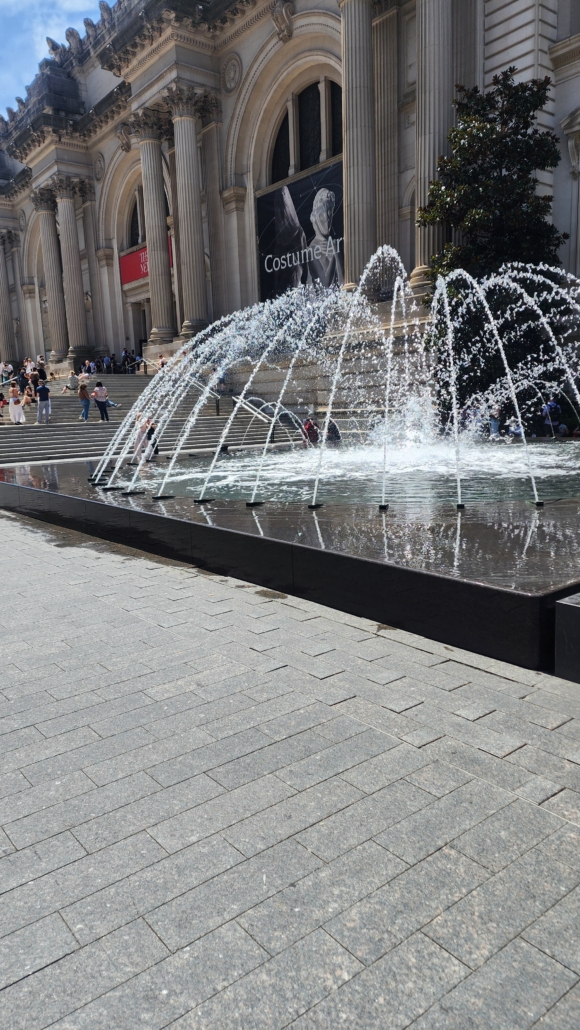
Today, I’m sharing our next New York adventure—our very first visit to the Met Museum!
photo credits via: Mrs. Shockley
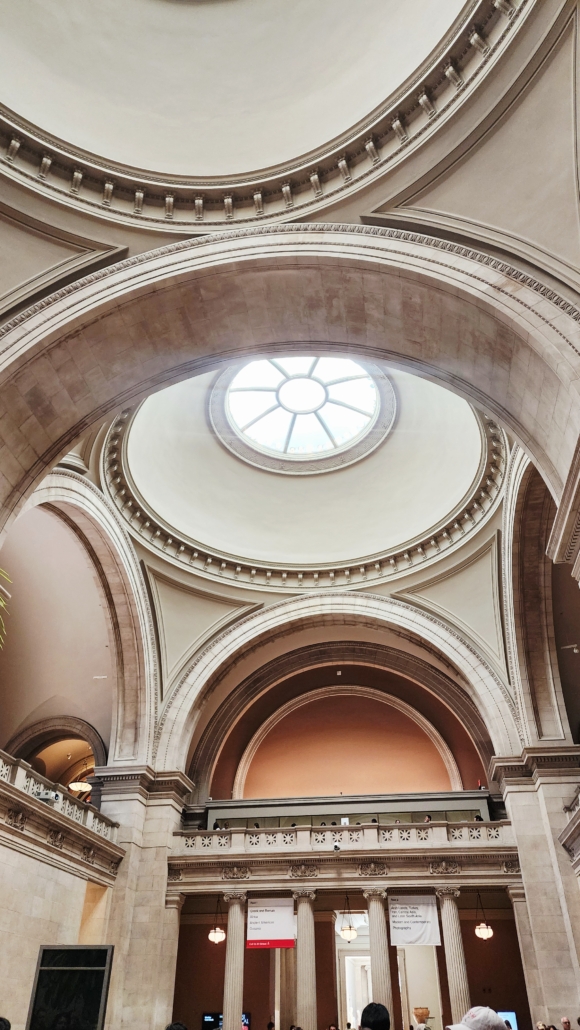
Walking into the Met was a lot to take in! For one thing, it was very crowded, but the staff was incredibly nice and funny. There were a few older women at the reception desk trying to help dozens of visitors while taking pens out of each other’s hands. LOL! It was actually pretty funny to watch.
The architecture was breathtaking as soon as we entered the building. It was absolutely beautiful, with grand spaces and exhibits everywhere you looked. There was so much to see that I wasn’t quite sure where to begin!
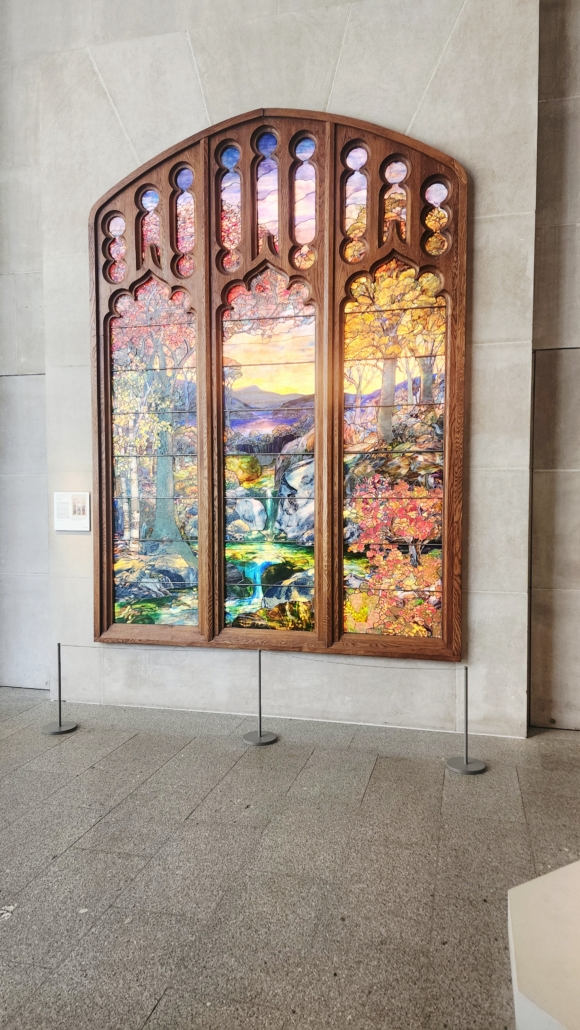
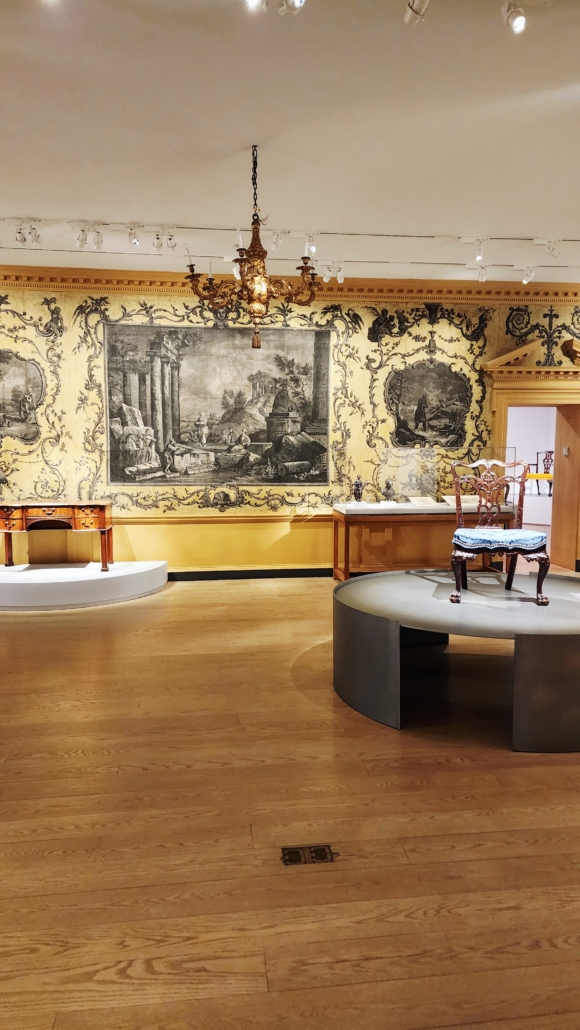
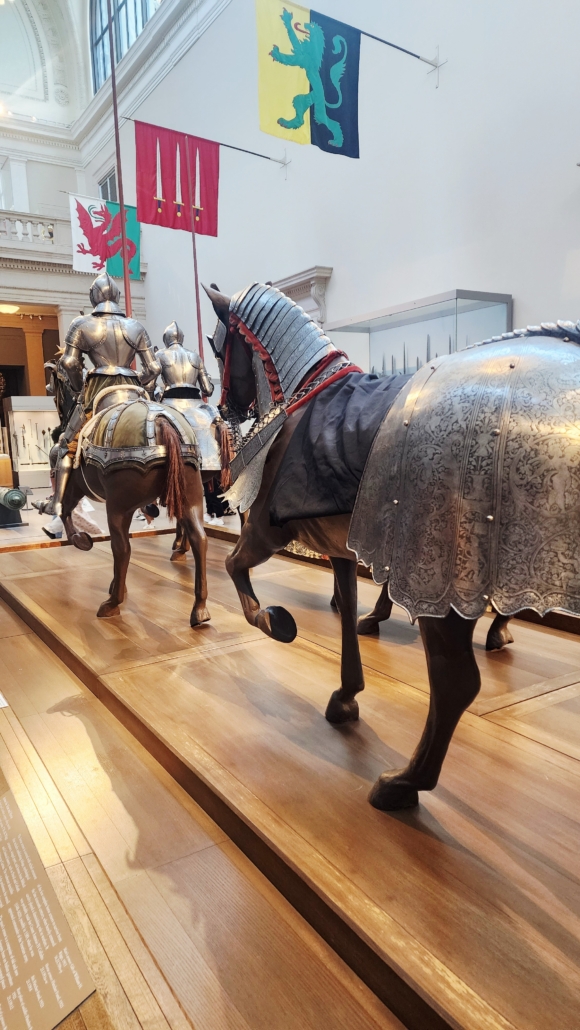
I didn’t take a lot of photos because I really wanted to be present and enjoy the moment. These were a few of my favorite exhibits. I especially loved the stained-glass exhibit and this beautiful mural. Even the yellow color of the wall caught my eye—it made the artwork feel even more special.
Unfortunately, I didn’t get the information about the artists or the names of these pieces, but they definitely left an impression on me.
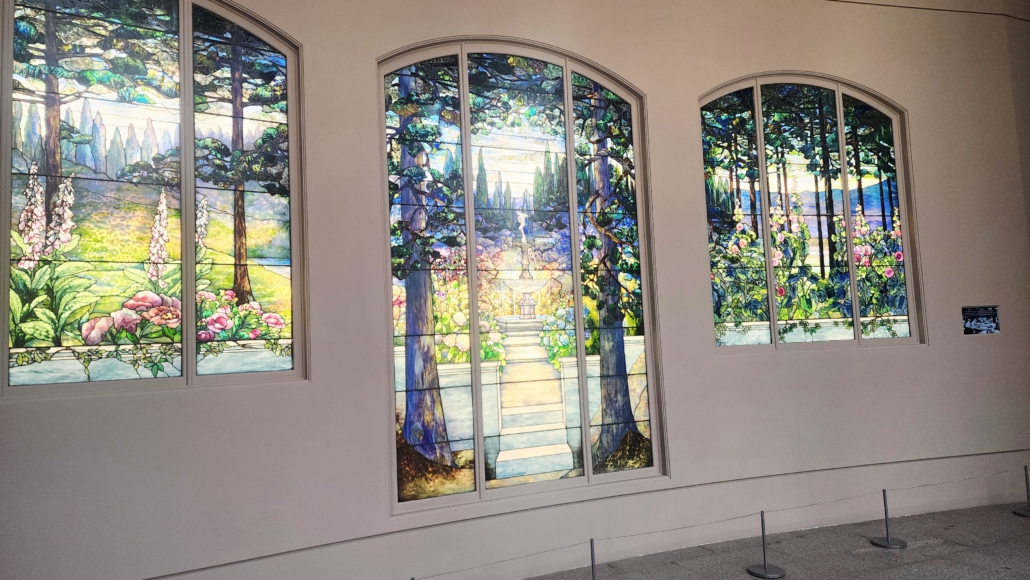
This photo does not do this piece justice. This was designed by Agnes F. Northrop and made by Tiffany Studios, New York. It was created in 1912. It is called the Garden Landscape. This is a majestic masterpiece. Conceived, commissioned and crafted by women, it highlights the important, often unrecognized role they played in Tiffany’s artistic enterprise. This was truly a captivating piece.
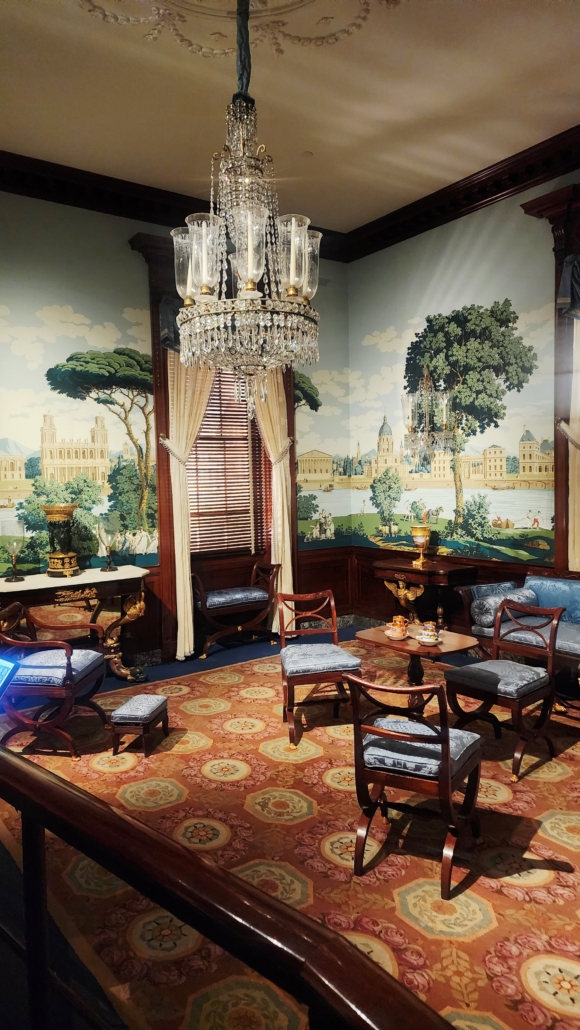
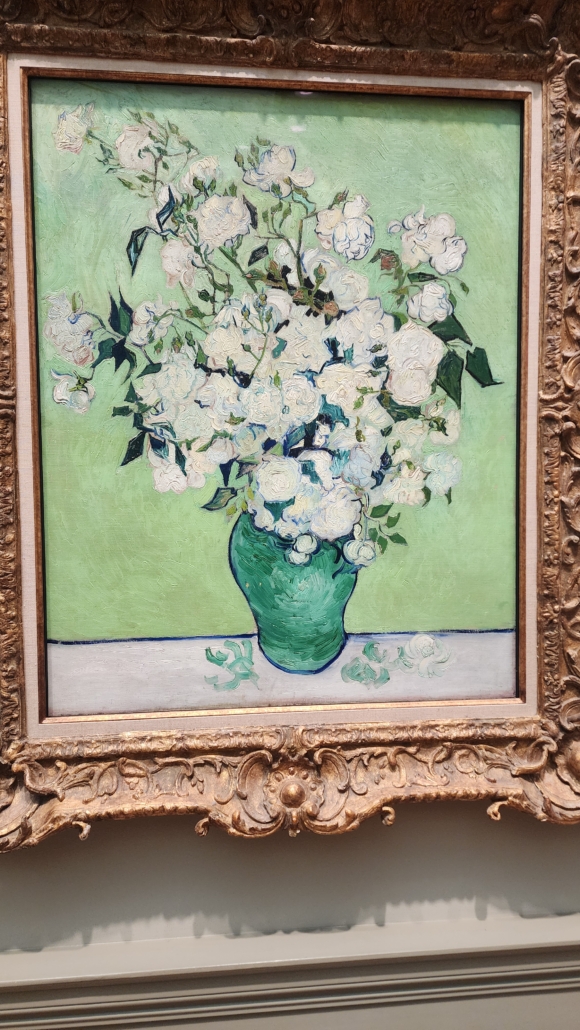
There were a few rooms in the museum. This is the Baltimore Room. It was a room from the townhome build for merchant and shipowner Henry Craig. It served as the Craig family’s parlor. On the right is a painting by Vincent van Gogh called Roses. It is from 1890 and is one of my favorites from him. On the eve of his departure from the asylum in Saint Remy in May 1890, Van Gogh painted an exceptional group of four still lifes, to which both The Met’s Roses and Irises belong.
Another interesting fact about this painting is that it was seized by the Nazis from Georg Simon Hirschland (1885-1942) in Essen in 1939, following Hirschland’s emigration to the United States in 1938. It was restituted to his heirs in New York in 1950. (info from the museum)
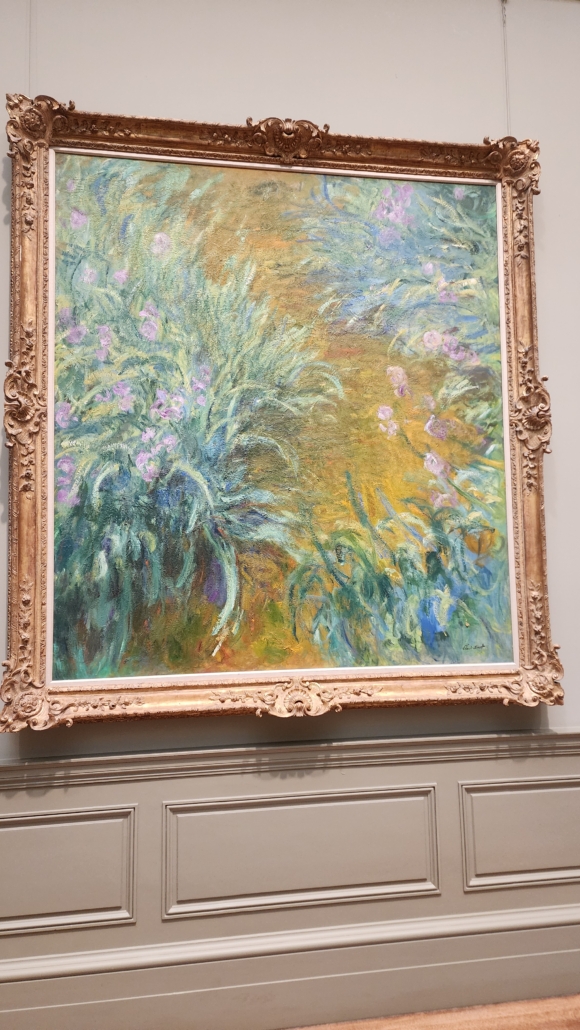
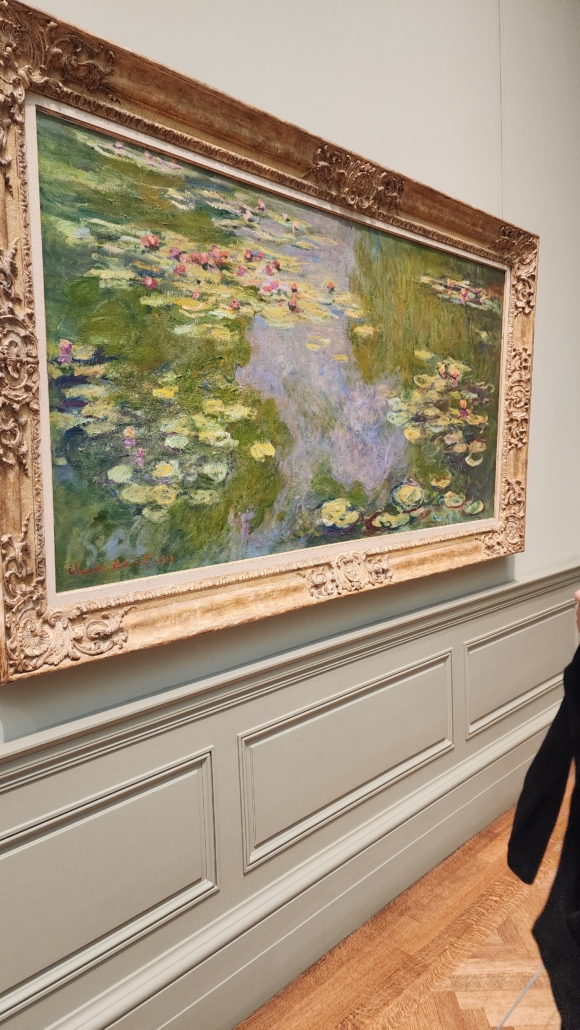
Next are two Claude Monet paintings. The one on the left is called the Path through the Irises (1914-17). Irises, among Monet’s favorite flowers, lined the pathways leading up to the house and Japanese bridge on the artist’s property at Giverny.
The one on the right is Water Lilies, 1919. One of Monet’s critics described this canvas of 1919 as waterlilies “in full flower asserting themselves… their golden discs encased in purple, against the cloudy waters”. (info from the museum)
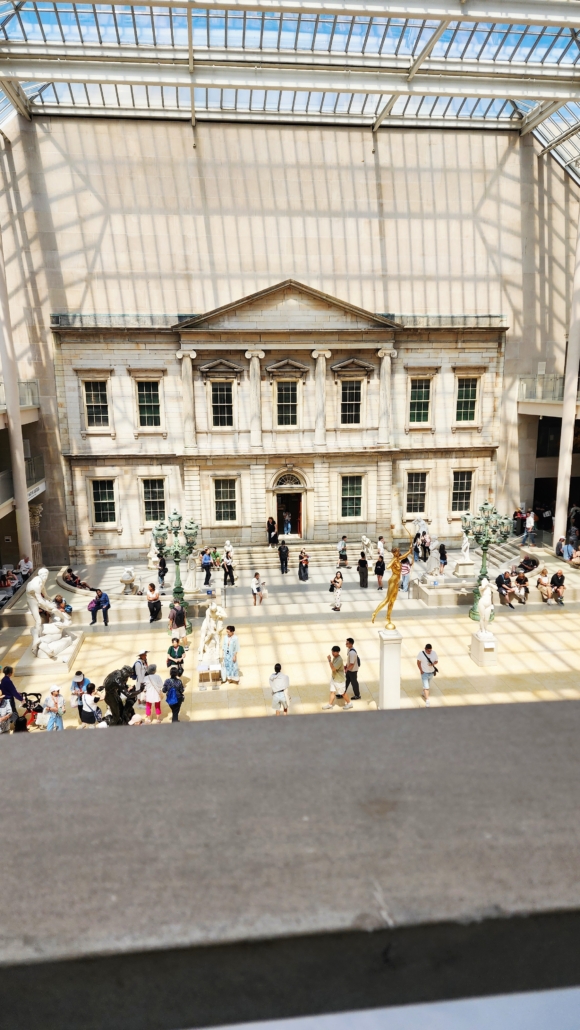
The grand marble building façade at the back is the Second Branch Bank of the United States, originally constructed on Wall Street in 1822–24 and later dismantled and reconstructed inside The Met. Its Greek Revival/Palladian design—with columns, pilasters, a triangular pediment, and symmetrical windows—creates the architectural centerpiece of the court. I thought that the look of this was so majestic sitting inside the Met. The fact that it is from the 1800s is incredible!
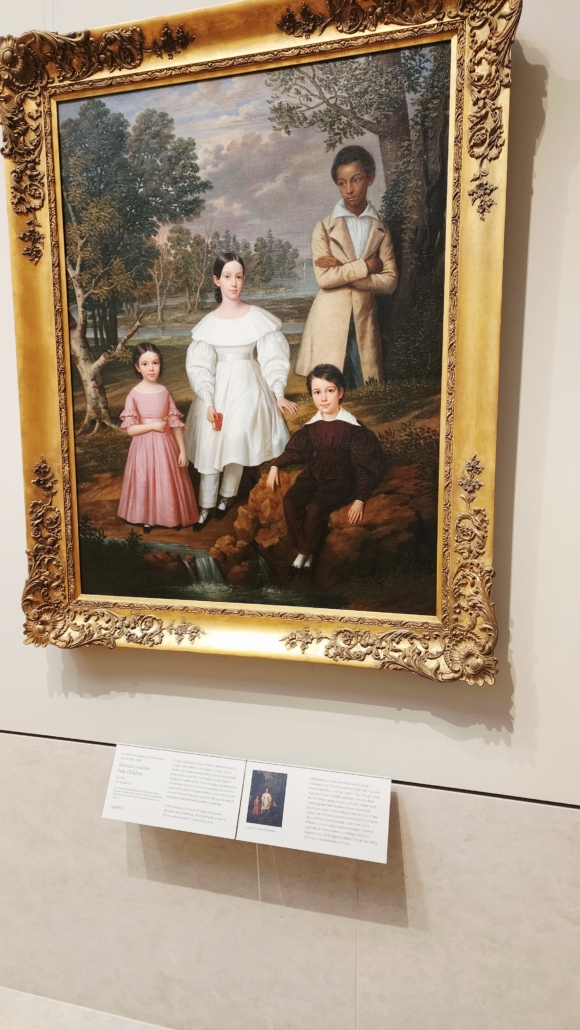
And finally the reason why I came to the Met…. Belizaire. It took Lauren and I a few minutes to find this painting but when we did I just smiled. Now I know this painting holds a lot of weight. Especially in regards to our history in this country but it also speaks the truth to me.
This painting is called Belizaire and the Frey Children. It was attributed to the French-American painter Jacques Guillaume Lucien Amans, painted around 1837. The painting shows three white children of the Frey family in a Louisiana landscape, with a Black teenager standing behind them. That teenager is Bélizaire, an enslaved Afro-Creole boy who belonged to the Frey family. Bélizaire isn’t pushed into the background as a servant or made into a stereotypical figure. Instead, he is physically elevated above the three children, leaning against a tree and looking thoughtful and self-possessed. The Met notes that this positioning gives him unusual visual importance for an African American subject in an American painting of this period.
At some point around the turn of the 20th century, someone from the Frey family deliberately painted over Bélizaire’s figure, effectively removing him from the family portrait. For decades, the painting was known as a portrait of three children in a Louisiana landscape. Bélizaire was approximately 15 years old when the portrait was painted. The Met’s research indicates that he survived the Civil War and eventually experienced freedom. Tragically, both Frey sisters died in 1837, the year the portrait was painted, while their brother died about nine years later.
And there’s an especially powerful irony: someone tried to erase Bélizaire from the picture, but the painting ultimately became famous precisely because he was recovered. The Met acquired it in 2023.
I truly think that the captain that enslaved him loved him. That is just my opinion. It reminds me of a story regarding one of my ancestors whose enslaver but an ad in the newspaper around the 1700s looking for him because he escaped. He wanted my relative back and said in the article that “he was incredibly smart”. Needless to say, he never found my relative.
I hope everyone enjoyed today’s post. Let me know in the comments what your thoughts are and if you have a favorite painting at the Met.